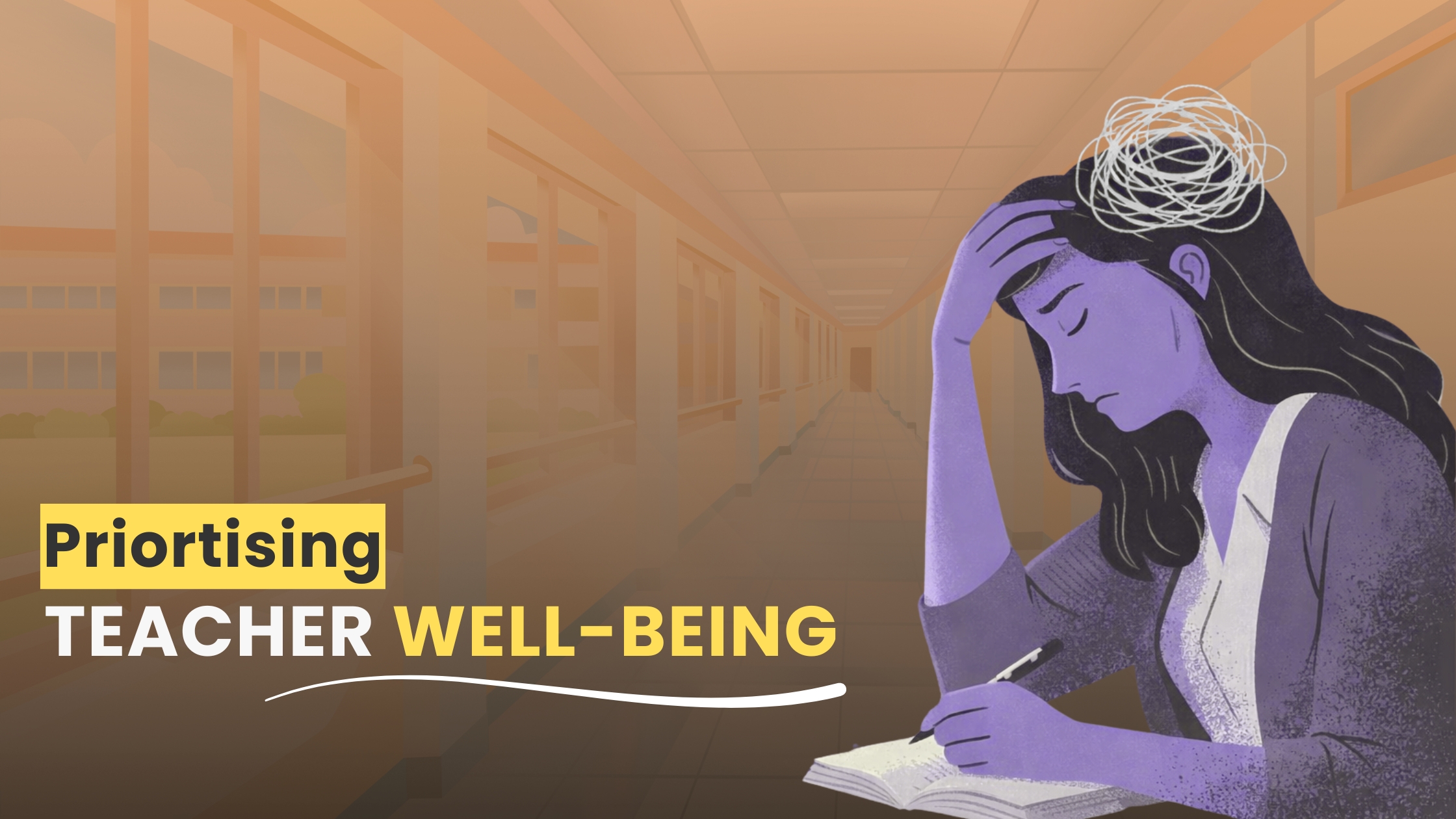
In discussions about mental health in schools, the primary focus often centres on students, which is certainly important. However, it is crucial to recognise that the emotional well-being of teachers also plays a significant role in shaping the psychological environment of the classroom.
To effectively address prevention, early identification, and suicide risk reduction, it is essential to prioritise the mental health of the adults responsible for creating and maintaining this environment. This concept parallels the safety instructions given on an aeroplane: one must secure one's own oxygen mask before assisting others.

Research highlights the impact that an adult's emotional state can have on a child's stress levels and overall well-being. When a calm adult interacts with a child, it can help alleviate the child's stress response. Conversely, a tense adult may increase a child's sense of alertness and vigilance. Furthermore, if an adult is emotionally unavailable, it can foster feelings of insecurity in the child. This dynamic is particularly relevant in educational settings, where teachers play a crucial role not just as instructors, but as emotional and regulatory anchors for their students. Chronic stress in teachers can significantly influence the classroom environment, as students may sense this tension even without explicit verbal communication.
Trauma-affected children often react strongly to their environments; even slight changes in tone, facial expressions, or signs of irritability can activate their survival instincts. Additionally, the concept of attachment extends beyond the home environment.
According to attachment theory, which was first introduced by John Bowlby, children naturally seek out secure relationships with adults who are consistent and emotionally available. This underscores the importance of stable and supportive connections for their development.
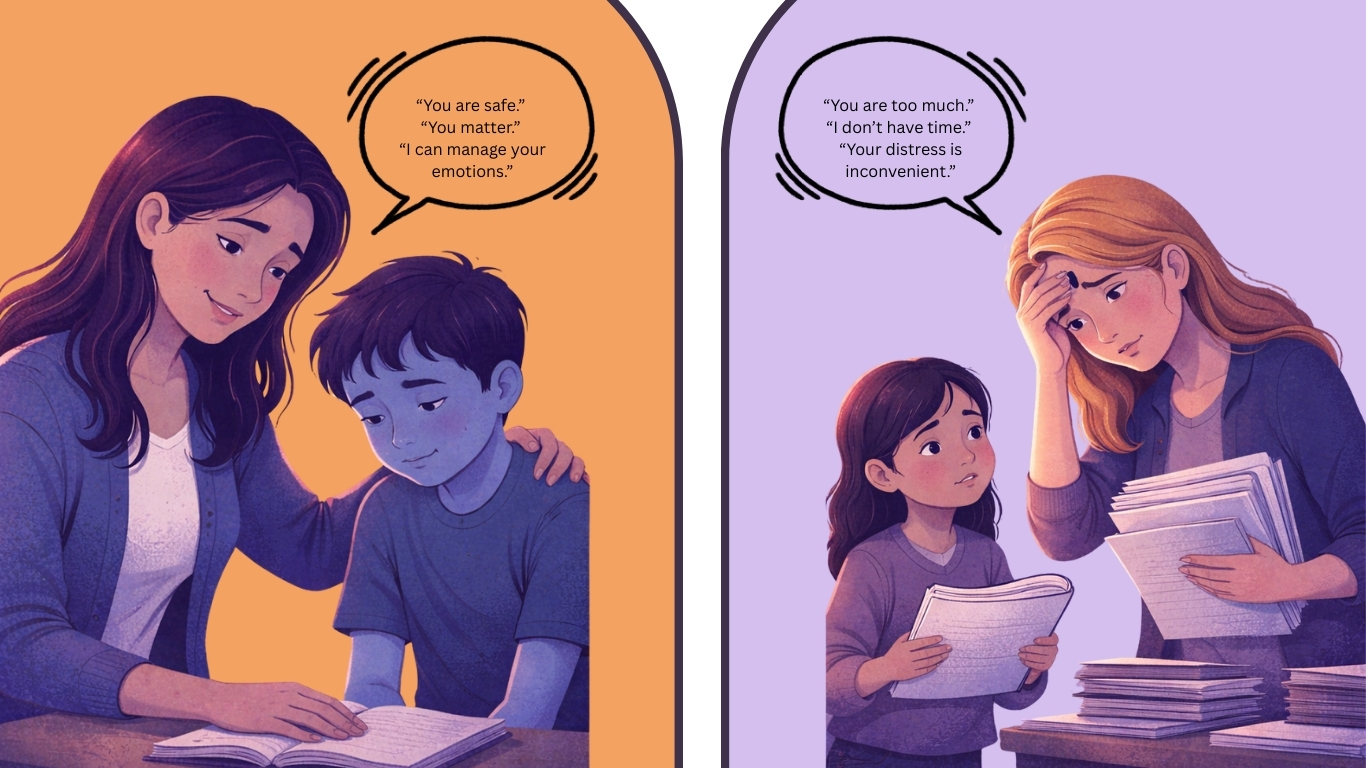
In school environments, teachers frequently take on the role of secondary attachment figures. A teacher who can regulate their emotions conveys messages like: “You are safe.” “You matter.” “I can manage your emotions.”
On the other hand, an exhausted teacher may unintentionally send different messages, such as: “You are too much.” “I don’t have time.” “Your distress is inconvenient.”
For vulnerable children, differences in care can affect their long-term mental health. Burnout is not just a problem at work; it is a serious issue for teachers. Research by Christina Maslach identifies three key aspects of burnout: emotional exhaustion, depersonalization, and a reduced sense of accomplishment. In classrooms, burnout can show up as irritability towards struggling students, feeling emotionally numb after crises, avoiding students who need help, and more disciplinary referrals.
Chronic stress in adults can significantly alter the classroom environment. When teachers experience prolonged pressure—such as from inspections, performance targets, and excessive workloads—their physiological response to stress changes. As a result, students often reflect this heightened stress. Research-based trauma frameworks, including those from the Substance Abuse and Mental Health Services Administration, highlight the importance of self-regulation before attempting intervention. An adult who is not regulated cannot effectively help a child who is also dysregulated.
When teachers receive adequate support, shifts in language and, more importantly, shifts in cognition occur. For example, “defiant” becomes “dysregulated,” “lazy” transforms into “overwhelmed,” and “attention-seeking” is reframed as “connection-seeking.”
This change in terminology reduces punitive reactions and fosters a more compassionate approach to containment. As a result, this shift directly impacts suspension rates, help-seeking behaviour, emotional safety, and academic persistence.
When teachers experience depletion, it results in burnout, which can lead to reduced patience. This reduction in patience may cause them to miss warning signs, resulting in delayed referrals and ultimately escalating crises.
Conversely, when teachers maintain emotional regulation, they experience greater emotional stability. This stability fosters increased trust, promotes earlier disclosures, facilitates timely referrals, and helps reduce risks.
Structured debriefs following student crises, access to confidential counselling, designated non-instructional time, peer reflective spaces, and clear referral pathways are essential components for supporting teacher well-being. Global frameworks aligned with the World Health Organisation increasingly recognise that the well-being of educators is foundational to the mental health of students.
If we aim for fewer behavioural escalations, earlier identification of depression, reduced adolescent self-harm, and safer spaces for disclosure, we must start with these initiatives.
- A regulated teacher serves as a preventive intervention. The classroom is not just a learning environment; it is a relational ecosystem. In that ecosystem, adult nervous systems play a crucial role.
- A teacher who feels adequately supported can remain calm, curious, and compassionate. Before we expect teachers to manage the distress of their students, we must ensure that someone is looking after their own well-being. This is not a luxury; it is a necessary measure for prevention.
My Safe Spaces has introduced a new prevention initiative called the SWISS Certification Program. This program offers anevidence-based framework tailored for India. It trains teachers and staff to recognise the early signs of student distress. It is crucial to understand that teachers act as regulators in the classroom, and supporting them is vital for systemic reform. Educational change starts with the educator's well-being, not just the curriculum.