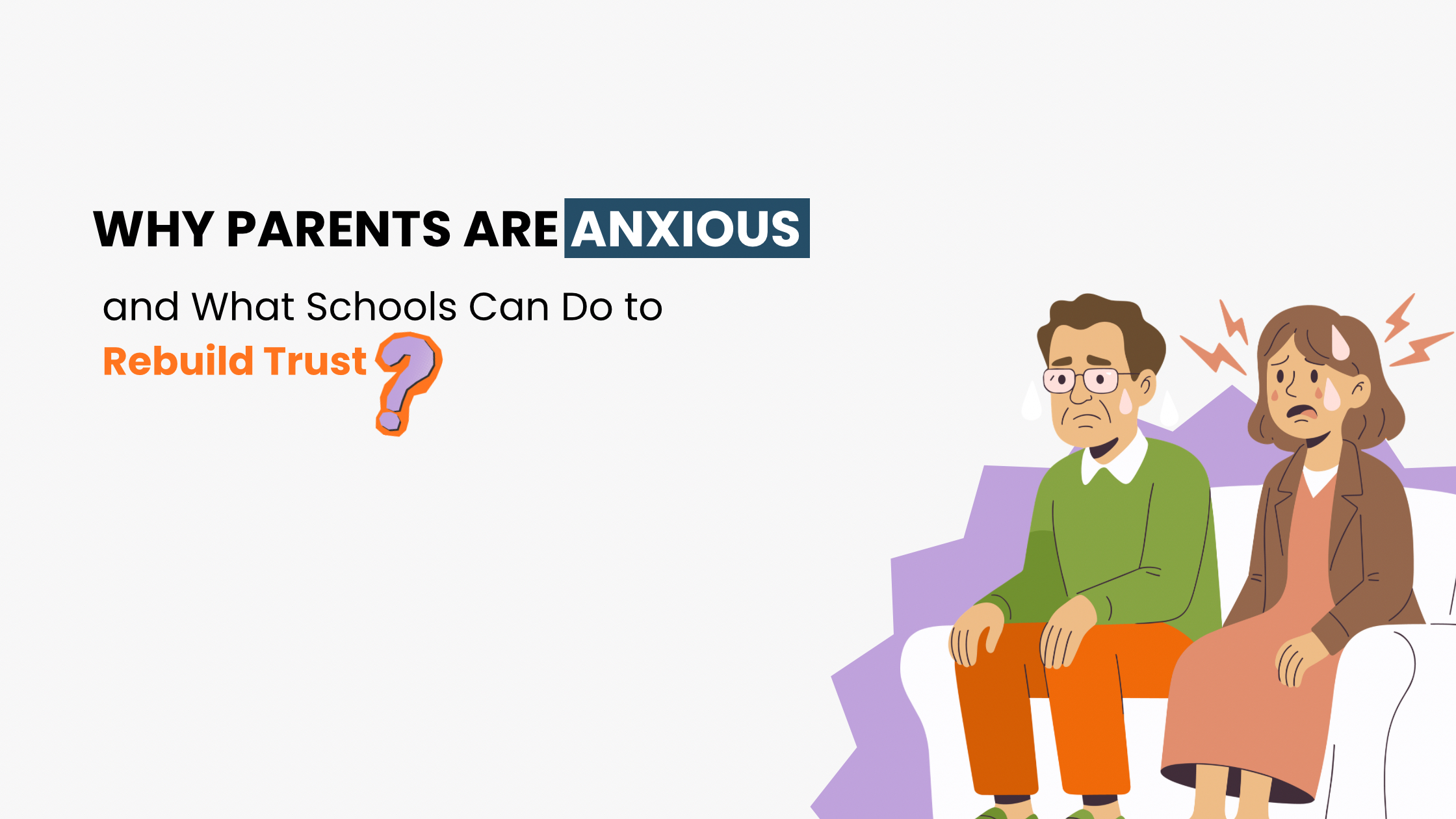
As a parent, have you ever caught your teen staring blankly at their phone, heart racing over a single unread message? Or watched them retreat into silence after a "bad grade" text from school? Or seen this anxiety ripple through families firsthand? There is often a loud silence that settles in a home with a teenager. At My Safe Spaces, I see it in the data all the time. But more importantly, I hear it in the voices of the educators and families we interact with every day. Parents today aren't just "worried"—they are navigating a state of chronic anxiety. And if we want to fix the ecosystem of education, we must start by understanding why.
The Anatomy of Modern Parental Anxiety
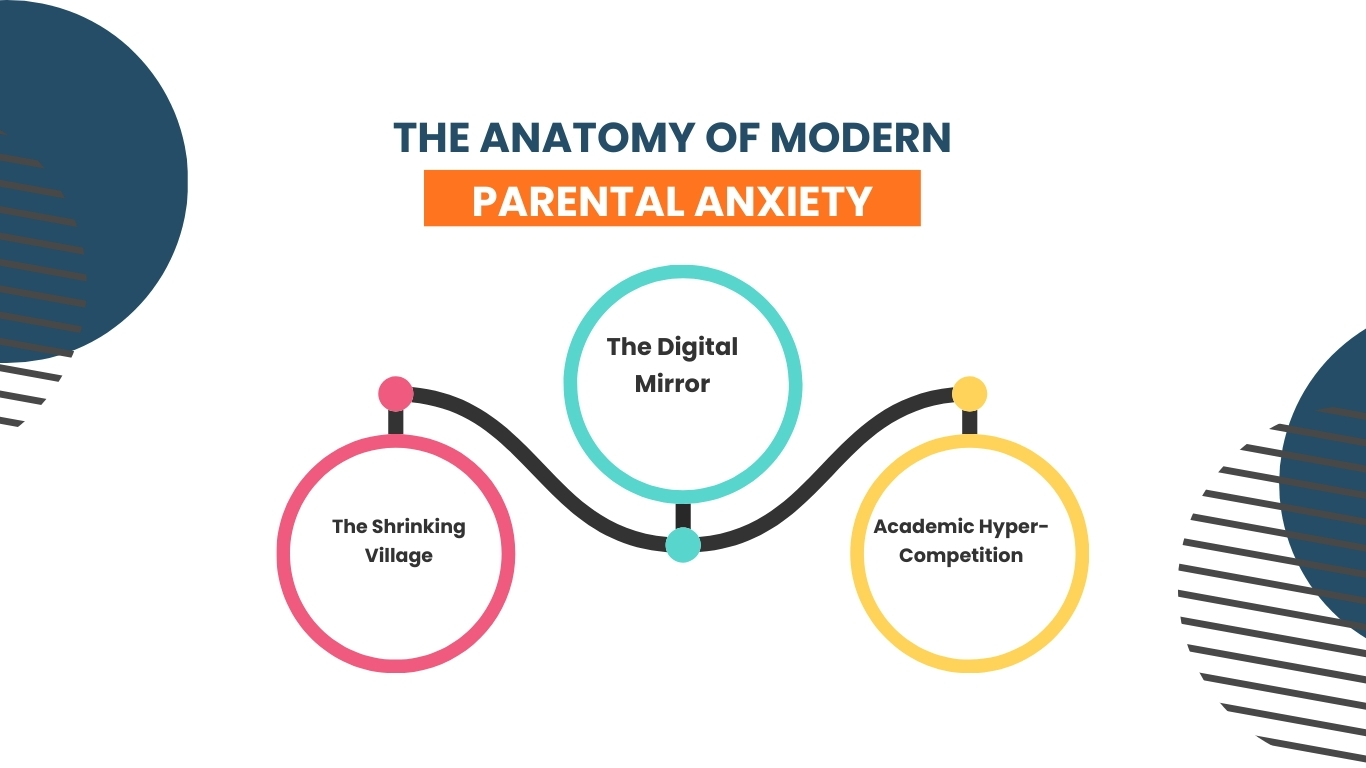 The Digital Mirror: Social media isn’t just a tool; for a teenager, it is an unregulated mirror. It provides a 24/7 stream of constant inflow of content that often makes them feel lesser or “not good enough”. For parents, this is a black box. We see the screen time, but we don’t always see the erosion of self-esteem happening behind it.
- The Shrinking Village: We are living in the nuclear family and the "only child” era. Without the buffer of siblings often or the wisdom of an extended family under one roof, the pressure on a single child to be the "everything" for their parents is immense. Conversely, the parent feels they are the sole architect of that child’s future. One mistake feels like a total structural failure.
- Academic Hyper-Competition: In a globalized economy, "doing your best" has been replaced by "being the best." This creates an environment where schools can feel like pressure cookers rather than sanctuaries.
Decoding the Silent Language
When a teenager slams a door or withdraws from the family for no obvious reasons, they are rarely just being "difficult." They are speaking a silent language. They are conveying a sensory overload that they don’t yet have the vocabulary to explain.
As a marketer, my job is usually to find the right words. But in this space, our task is to listen to the lack of words. We are navigating a path where we must balance the child’s need for autonomy, the parent’s need for reassurance, and the school’s need for operational safety.
The Role of the School: Moving from Compliance to Connection
Trust is broken when there is a gap between what a school says and what a child feels. To rebuild that trust, schools must move beyond traditional reporting and adopt a more human-centric, systemic approach.
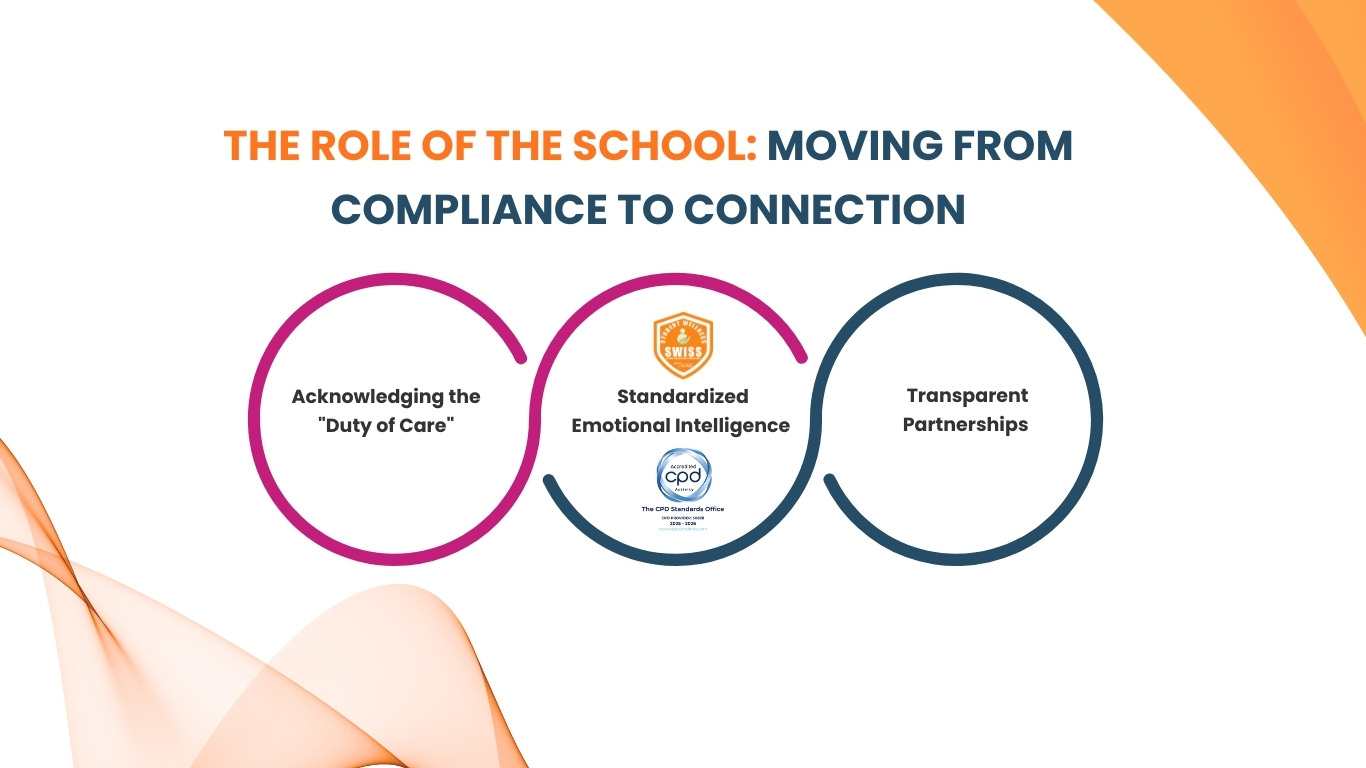 Acknowledging the "Duty of Care" It is no longer enough for a school to have a counsellor on call. Safety must be a "core operational layer." This is why frameworks like the Student Wellness & Institutional Safety Standards (SWISS) are becoming boardroom conversations. When a school standardizes its safety protocols, it tells parents: “We aren't just reacting to crises; we have built a fortress of prevention.”
- Standardized Emotional Intelligence Parents feel anxious when they suspect that their child’s wellbeing depends on which teacher they happen to have. Trust is rebuilt when CPD backed programs as SWISS ensures that every adult on campus—from the principal to the coach—is trained to recognize the "silent language" of distress.
- Transparent Partnerships Schools need to stop acting as "black boxes" where children are dropped off at 8 AM and picked up at 3 PM. We need a "delicate balance" where schools share insights into the peer dynamics and stressors they see on campus, helping parents feel like they are part of a team rather than outsiders looking in.
The Takeaway: A New Social Contract
At My Safe Spaces, we believe that the next competitive advantage in education won’t be the size of the lab or the speed of the Wi-Fi. It will be Institutional Safety Standards.
Rebuilding trust requires a new social contract between parents and schools. It requires us to admit that:
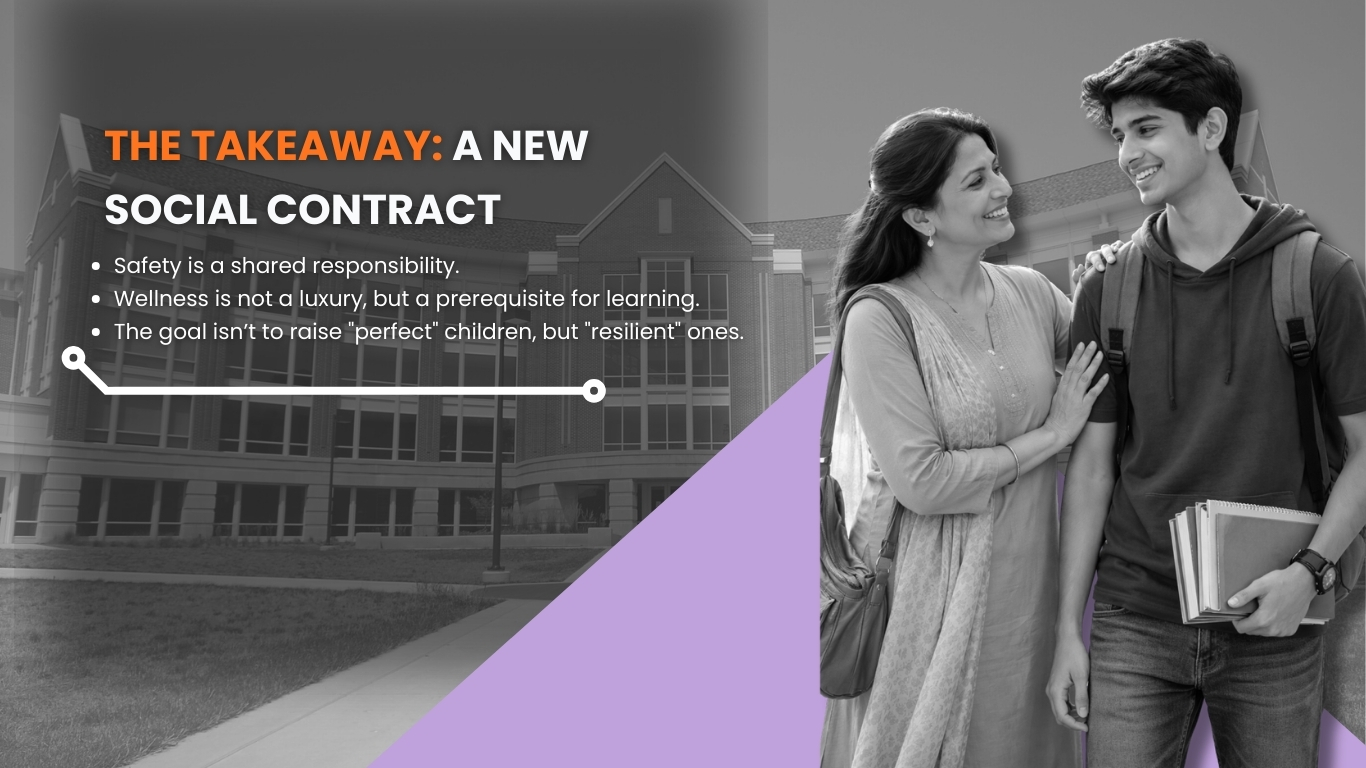 Safety is a shared responsibility.
- Wellness is not a luxury, but a prerequisite for learning.
- The goal isn’t to raise "perfect" children, but "resilient" ones.
As we navigate this path, our focus isn't on "selling" a solution, but on advocating for a cultural shift. We want to build schools that are structurally safer and emotionally sound, so that when that bedroom door closes at night, both the parent and the child can breathe a little easier.