In the field of developmental psychology, adolescence is recognized as one of life’s most volatile and complex chapters. It is a formative era defined by the quest for identity, the push for independence, and an intense craving for social belonging.Yet, beneath the surface of this transition lies a staggering reality: globally, one in seven 10-to-19-year-olds experiences a mental disorder. These struggles account for 15% of the global burden of disease in this age group, and tragically, suicide remains the third leading cause of death for those aged 15–29.
Adolescents today navigate a gauntlet of physical, emotional, and social transformations. When you layer these natural shifts with a widening generational gap, hyper-competitive peer environments, and a professional landscape being rewritten by technology, the pressure becomes monumental.
 Why the Silence?
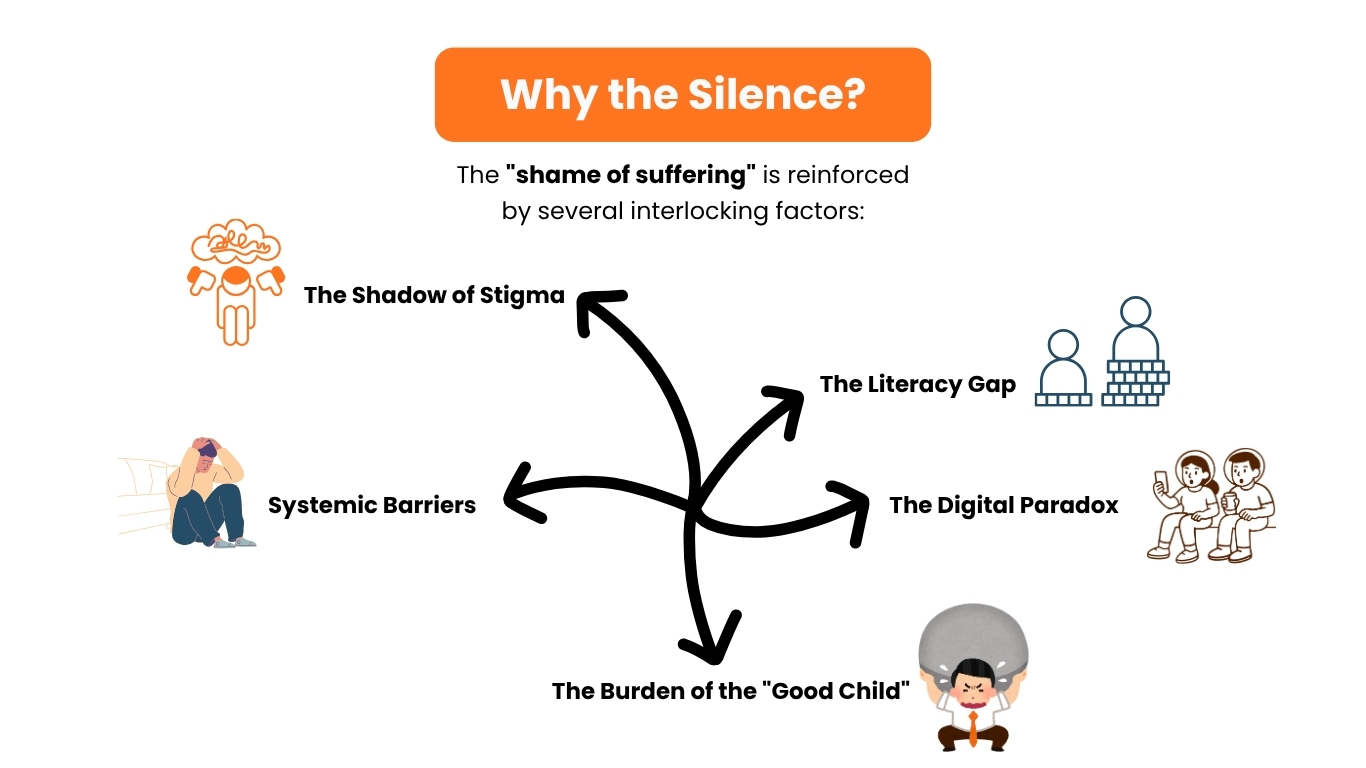
If the distress is so pervasive, why aren’t students reaching out? The "shame of suffering" is reinforced by several interlocking factors:
- The Shadow of Stigma: Particularly in the Indian context, mental health is often shrouded in stigma. Admitting to a struggle feels like admitting to a character flaw, attaching a sense of shame to the act of seeking help.
- The Literacy Gap: Stigma breeds ignorance. Many adolescents lack the "emotional vocabulary" to recognize that their internal turmoil is a treatable condition rather than a personal failing.
- The Digital Paradox: Despite being more "connected" than ever, the influence of individualism and a heavy reliance on social media and AI chatbots has eroded the art of vulnerability. Real-world communication is being replaced by curated digital facades, making it harder to express raw, honest emotions.
- The Burden of the "Good Child": Parental pressure to achieve academic excellence can be suffocating. To maintain the image of the successful, "perfect" child, many students hyper-function, suppressing their failures and anxieties until they reach a breaking point.
- Systemic Barriers: Socioeconomic struggles, family instability, and the sheer cost of professional therapy create a physical wall between a child and the help they need. When schools lack inclusive, sensitized environments, the message to the student is clear: Keep it to yourself.
A Path Toward Collective Accountability
To break this cycle of suppression, our response must be as multifaceted as the problem itself. We cannot place the burden of "resilience" solely on the shoulders of the youth; society must take accountability for the stereotypes it upholds.
Parents can bridge the generational divide by proactively seeking education—through workshops and literature—to better understand the psychological nuances of the modern teenage experience.
Schools must evolve beyond being mere academic hubs. Wellbeing should be woven into the daily curriculum, ensuring that the staff is competent in identifying distress and that pathways to support are visible, accessible, and non-judgmental.
Finally, students themselves deserve to be psychoeducated. By empowering them with coping strategies and emotional intelligence, we give them the tools to navigate a high-pressure world without losing themselves.
Change is a slow, deliberate process, but it is an absolute necessity. By dismantling the barriers of shame and systemically fostering empathy, we can ensure that no student has to suffer in silence