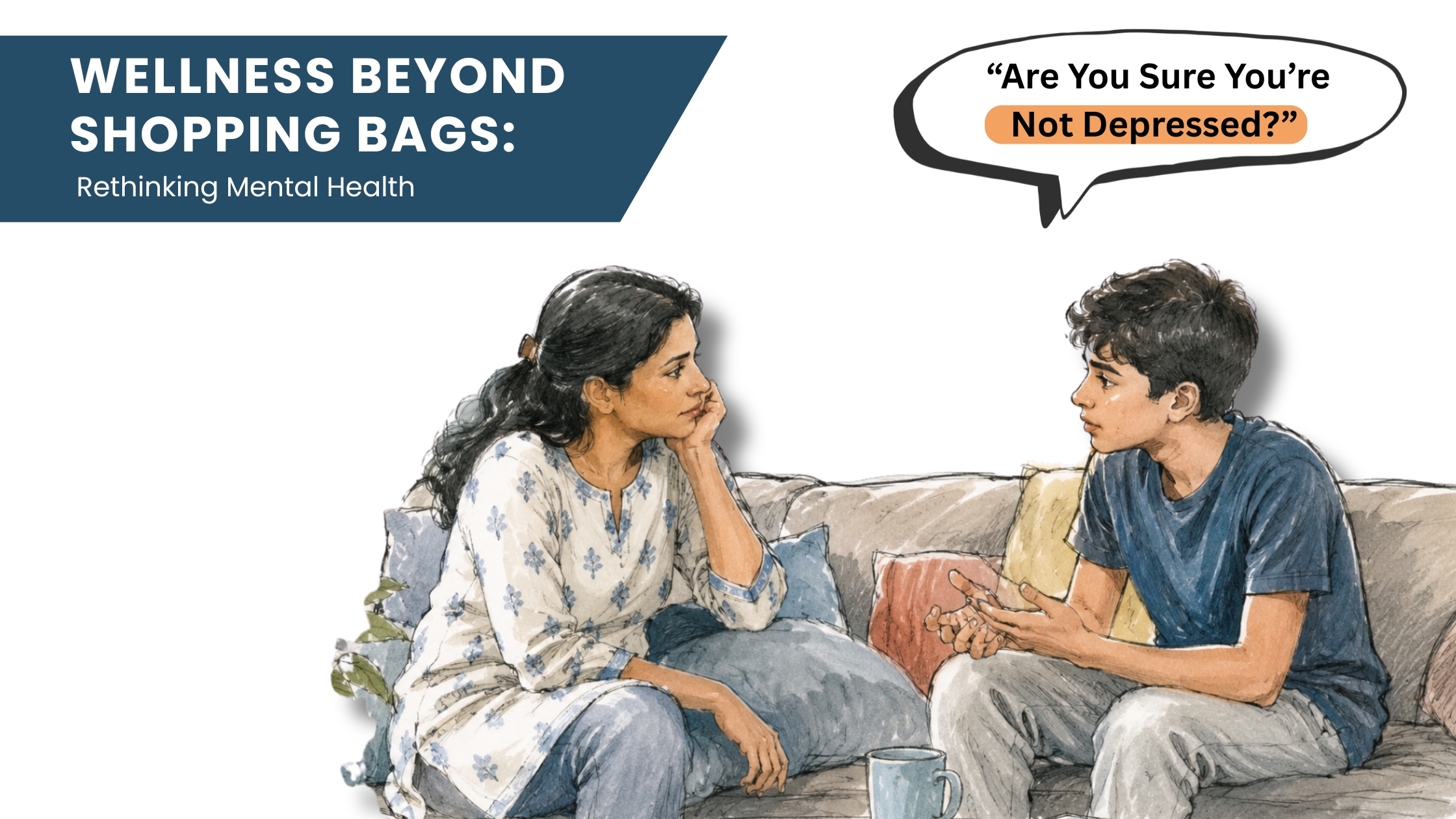
It was a simple question from my 13-year-old son that stopped me in my tracks: "Are you suffering from depression?" The reason he asked was almost amusing at first.
We were chatting casually, and he asked, “When you go to a mall, what all things do you want to buy?” My answer was straightforward: “Nothing. I don’t feel like buying anything.”
He looked at me with concern. “You don’t watch TV or movies, you eat whatever is served to you, and now you don’t feel like buying anything. Are you sure you’re not into depression?”
That moment revealed something profound about how the younger generation perceives wellness — especially mental wellness. For them, happiness and mental health often seem tied to consumption: food choices, entertainment, shopping, and material desires. If you don’t crave these things, they wonder if something is wrong.
The Consumerist Lens of Wellness
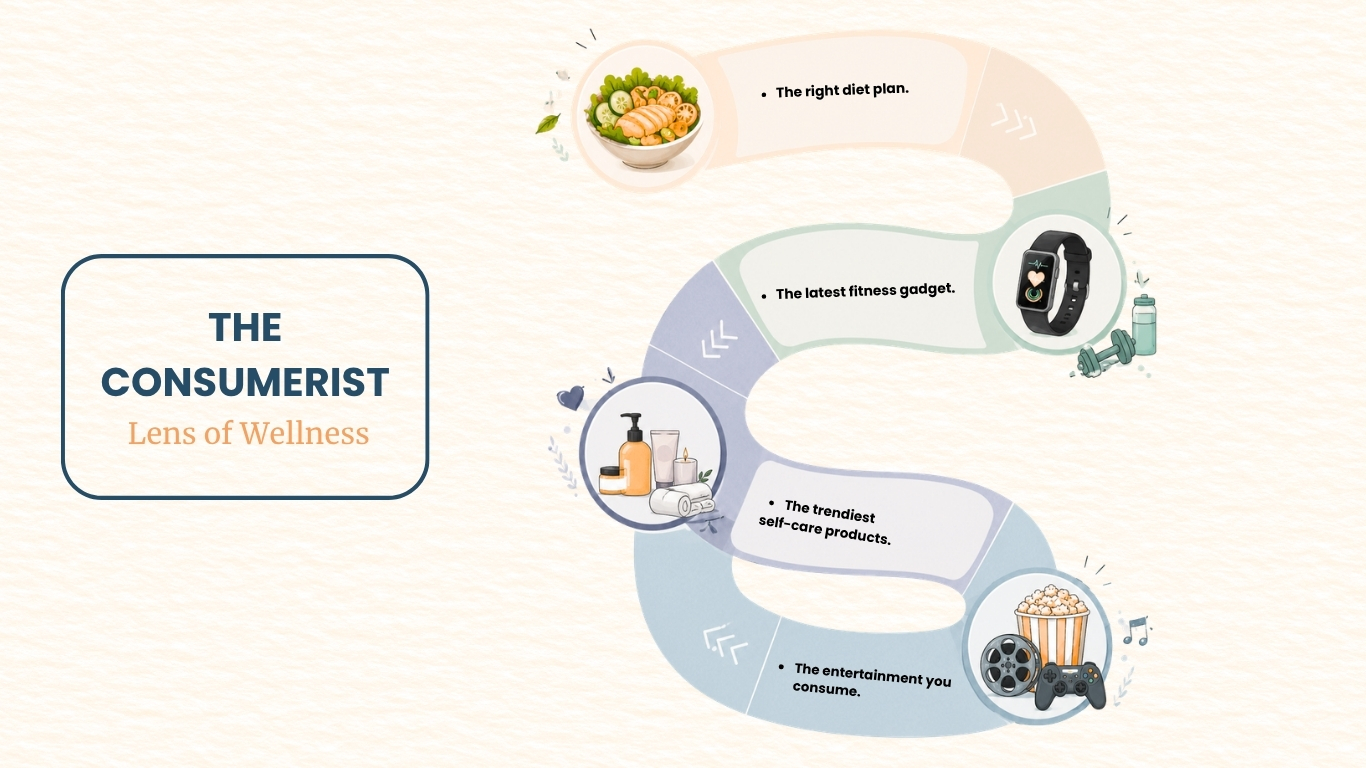
- The right diet plan.
- The latest fitness gadget.
- The trendiest self-care products.
- The entertainment you consume.
For adolescents growing up in this environment, mental wellness can easily be equated with visible engagement in these activities. If you’re not buying, watching, or indulging, it may look like withdrawal — and withdrawal, in their minds, equals depression.
But is that really the case?
Wellness as Inner Balance
As a psychologist, I see wellness differently. True wellness is not about how many things you consume but about how deeply you connect with yourself and the world around you. It’s about:
- Emotional regulation: the ability to sit with your feelings without being overwhelmed.
- Mindful living: savoring the present moment, whether it’s a meal, a walk, or a conversation.
- Purpose and meaning: finding joy in contribution, learning, or relationships rather than in possessions.
- Resilience: the strength to face life’s challenges without collapsing under them.
When these elements are in place, wellness becomes a state of balance — not a shopping list.
A Generational Gap in Understanding
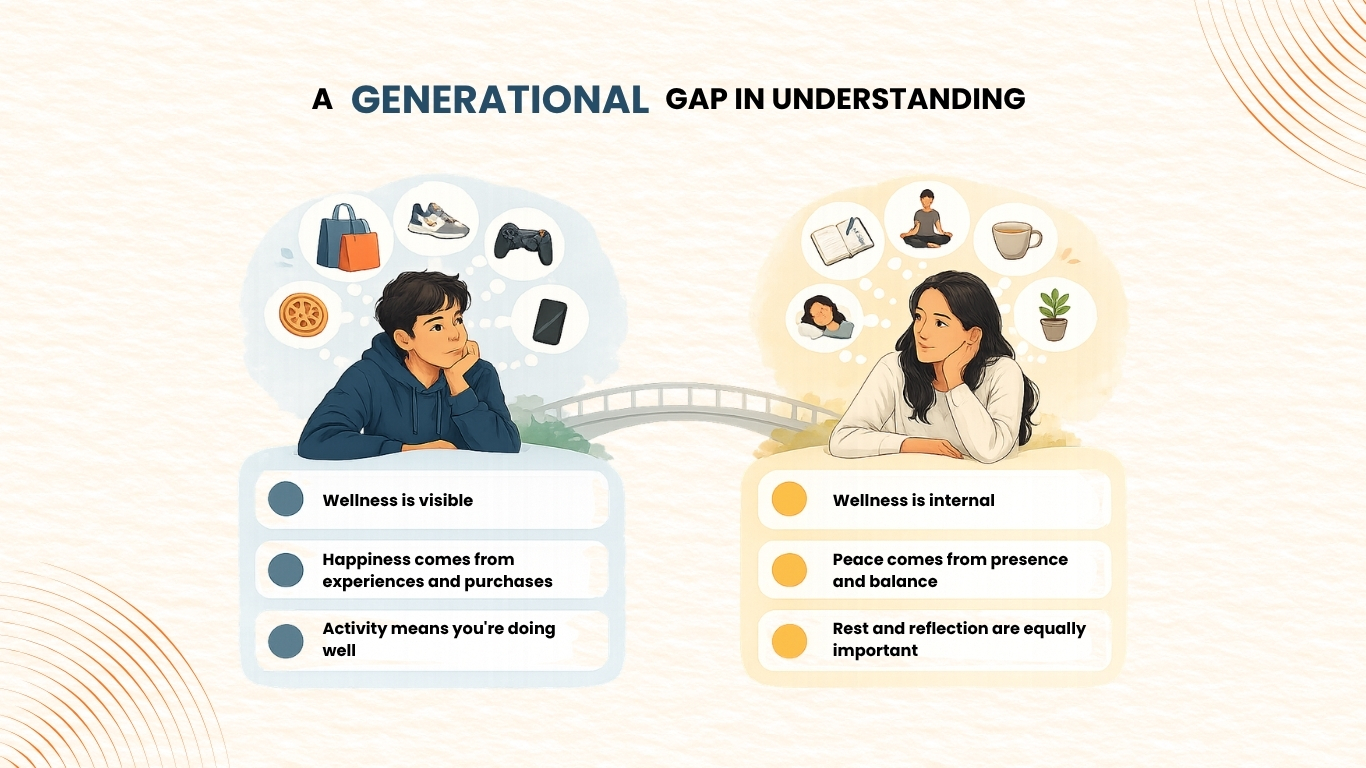
This gap is important to acknowledge. If young people equate wellness with consumption, they may overlook the quieter, deeper practices that sustain mental health: journaling, meditation, meaningful conversations, or simply resting without guilt.
Reframing Wellness for Mental Health
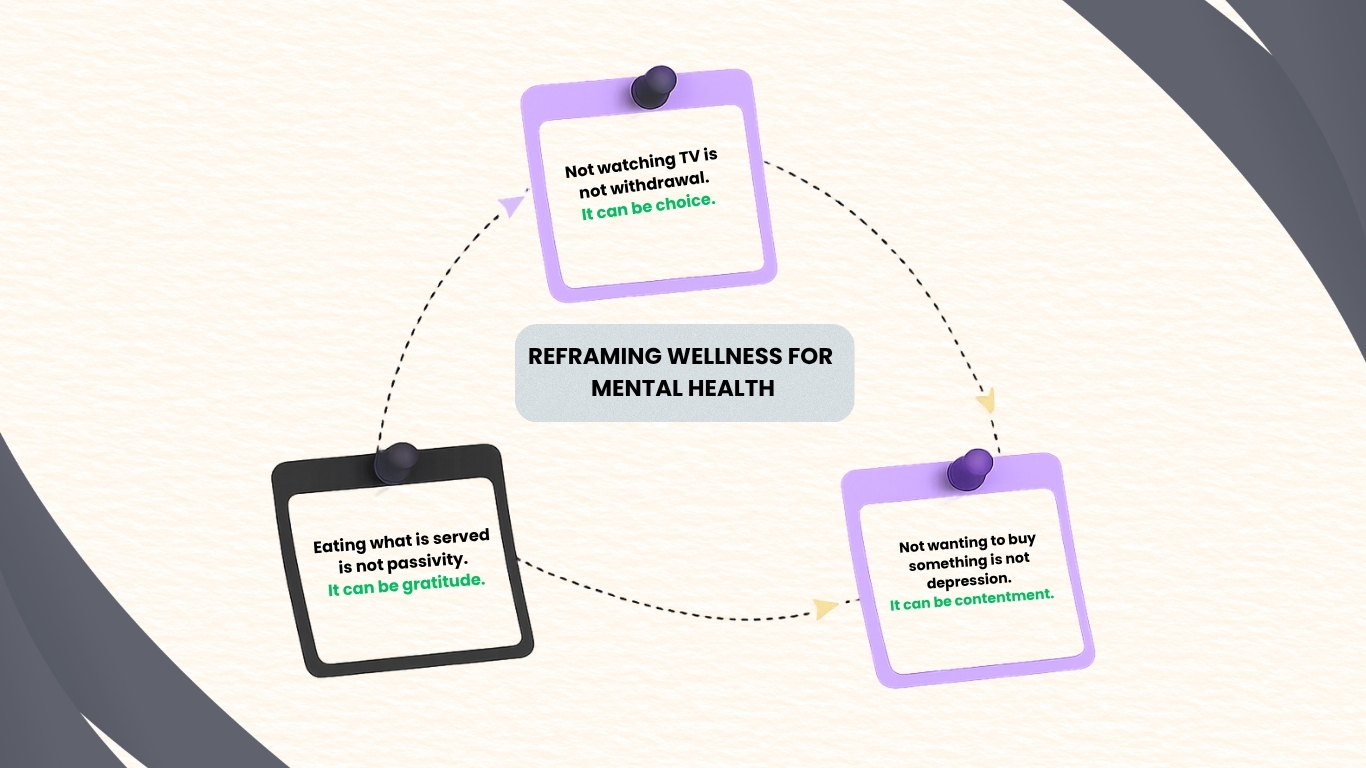
- Not wanting to buy something is not depression. It can be contentment.
- Eating what is served is not passivity. It can be gratitude.
- Not watching TV is not withdrawal. It can be choice.
Mental wellness is not about constant stimulation or desire. It is about balance, awareness, and authenticity.
Passing the Torch of Balance
That conversation with my son reminded me how urgently we need to redefine wellness in our homes, schools, and communities. If we continue to equate wellness with consumption, we risk raising a generation that feels empty when the shopping bag is empty.
But if we teach them that wellness is about inner strength, emotional awareness, and meaningful connection, we give them tools that last far beyond the mall, the movie, or the meal.
Wellness, after all, is not about what we buy — it’s about how we live.