Schools are incredibly important for children’s development, as they spend more of their waking hours in school than at home. While family influences like parents' education, socioeconomic status, and social connections are crucial for children as they navigate the complexities of their social and academic lives, schools play a vital role in fostering a supportive environment. They cultivate compassion and kindness, emphasizing the inherent dignity of every individual. These foundational values are essential to shaping future leaders committed to building a fair, equitable, and sustainable society.
Feeling safe and secure is a fundamental human need, and we all deserve it in our environments, whether at home, school, or work. It’s heartbreaking to think that many students fear coming to school. Schools have a moral responsibility to provide a safe space, as safety is foundational to students' academic engagement and overall well-being, regardless of socioeconomic background. With smaller family sizes becoming more common, students can feel immense pressure to excel academically. Schools serve as important settings for social interaction, allowing students to understand and appreciate differences among their peers. However, it’s concerning that fears around personal, social, and cultural differences can lead to bullying and harassment. When students are targeted for their appearance, personality, neurodiversity, religion, or socioeconomic background, it can create a profound sense of fear.
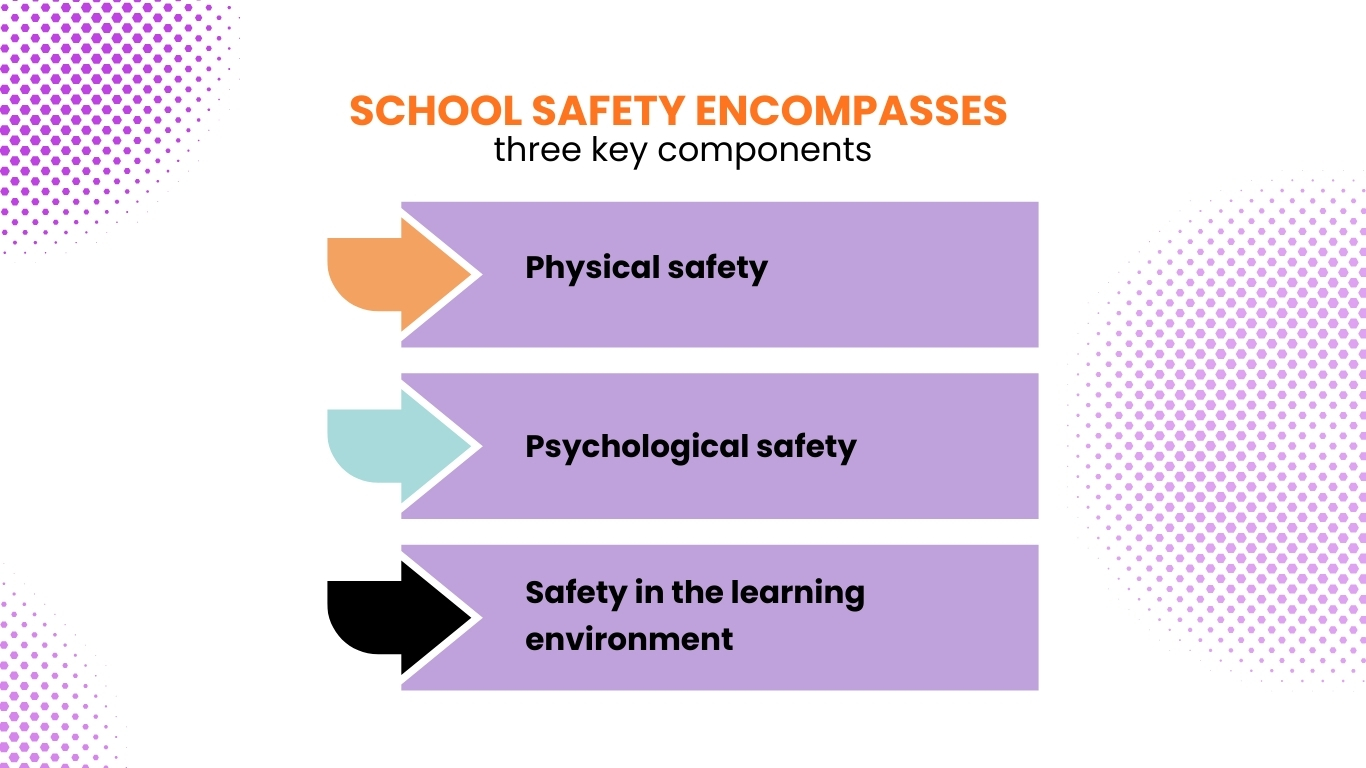
School safety encompasses three key components: (a) physical safety, (b) psychological safety, and (c) safety in the learning environment. Physical safety means ensuring that students are protected from bullying and aggression at school. Psychological safety provides reassurance that they can attend school without the anxiety of verbal harassment or social exclusion. Safety in the learning environment ensures that students feel comfortable and secure in the classroom, where they can freely ask questions to clarify and deepen their understanding. It is so important for schools to prioritize safety at all these levels.
A lack of physical safety can significantly impact a student's motivation to attend school and engage meaningfully in their studies. There is a clear connection between bullying, harassment, and issues such as school dropout rates and truancy. When students feel ostracized or verbally attacked, their sense of belonging—a crucial factor in academic engagement, love of learning, and overall well-being—can be severely compromised. Continuous experiences of social exclusion, both in and out of the classroom, can lead to anxiety about attending school, making it difficult for students to participate in both curricular and extracurricular activities fully. Every child deserves to feel safe, valued, and encouraged in their school environment.
By creating a safe learning environment, schools communicate that they value each student, regardless of who they are. Safe schools ensure that the dignity of every student is recognized and nurtured, allowing them to realize their full potential. In my research, I outline 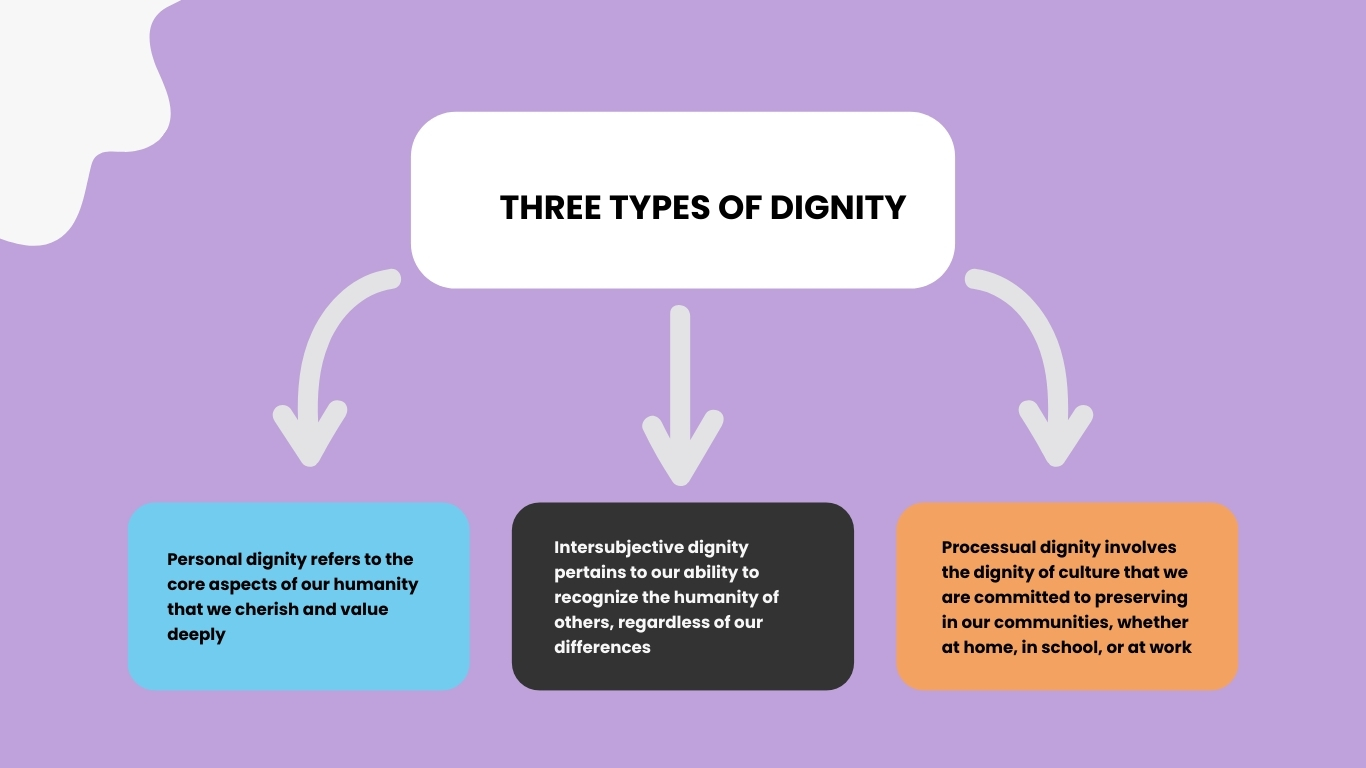 three types of dignity: Personal dignity refers to the core aspects of our humanity that we cherish and value deeply; Intersubjective dignity pertains to our ability to recognize the humanity of others, regardless of our differences; Processual dignity involves the dignity of culture that we are committed to preserving in our communities, whether at home, in school, or at work. I define dignity as an embodied practice through which we protect ourselves, honor others' dignity, and commit to preserving the dignity of culture within our communities. All three types of safety violations mentioned are sources of dignity injuries that significantly impact self-esteem, emotional regulation, and both physical and psychological well-being. Dignity injuries also affect an individual's internal locus of control (i.e., sense of agency) and their ability to build positive social relationships - an essential skill for recognizing the interconnected nature of our lives and our ethical imperative to care for each other. Schools must commit to fostering a culture of dignity where the safety of every student is prioritized. By adopting a holistic approach to mindfulness that nurtures kindness, compassion, and a love for learning, schools can institutionalize a dignity culture both inside and outside the classroom. This environment allows students to engage in their learning with an open mind, curiosity, and courage, echoing the sentiments expressed in Rabindranath Tagore’s poem, "Where the Mind is Without Fear."
Where the mind is without fear, and the head is held high;
Where knowledge is free;
 Where the world has not been broken up into fragments by narrow domestic walls;
Where words come out from the depth of truth;
Where tireless striving stretches its arms towards perfection;
Where the clear stream of reason has not lost its way into the dreary desert sand of dead habit;
Where the mind is led forward by thee into ever-widening thought and action—
Into that heaven of freedom, my father, let my country awake!
Schools need to commit to creating a mindful dignity culture where students can learn without fear, empowering them to become future leaders, thinkers, artists, and scientists who aim to make a positive impact by promoting peace, compassion, and well-being in their communities.