There is something I have been reflecting on deeply over the past year while working closely with schools across the country. In education, the adults who spend the most time with students are often the least trained to handle the emotional realities students bring to them. This is “The Contact Hours Paradox.”
As a counsellor, I saw firsthand that students rarely disclose distress in formal settings first. They don’t sit down and clearly say, “I’m struggling.” Instead, it shows up indirectly either through behavior, withdrawal, sudden silence, irritability, disengagement, absenteeism, or small passing comments that slip by in a busy school day.
The first to notice? Rarely mental health pros. It’s:
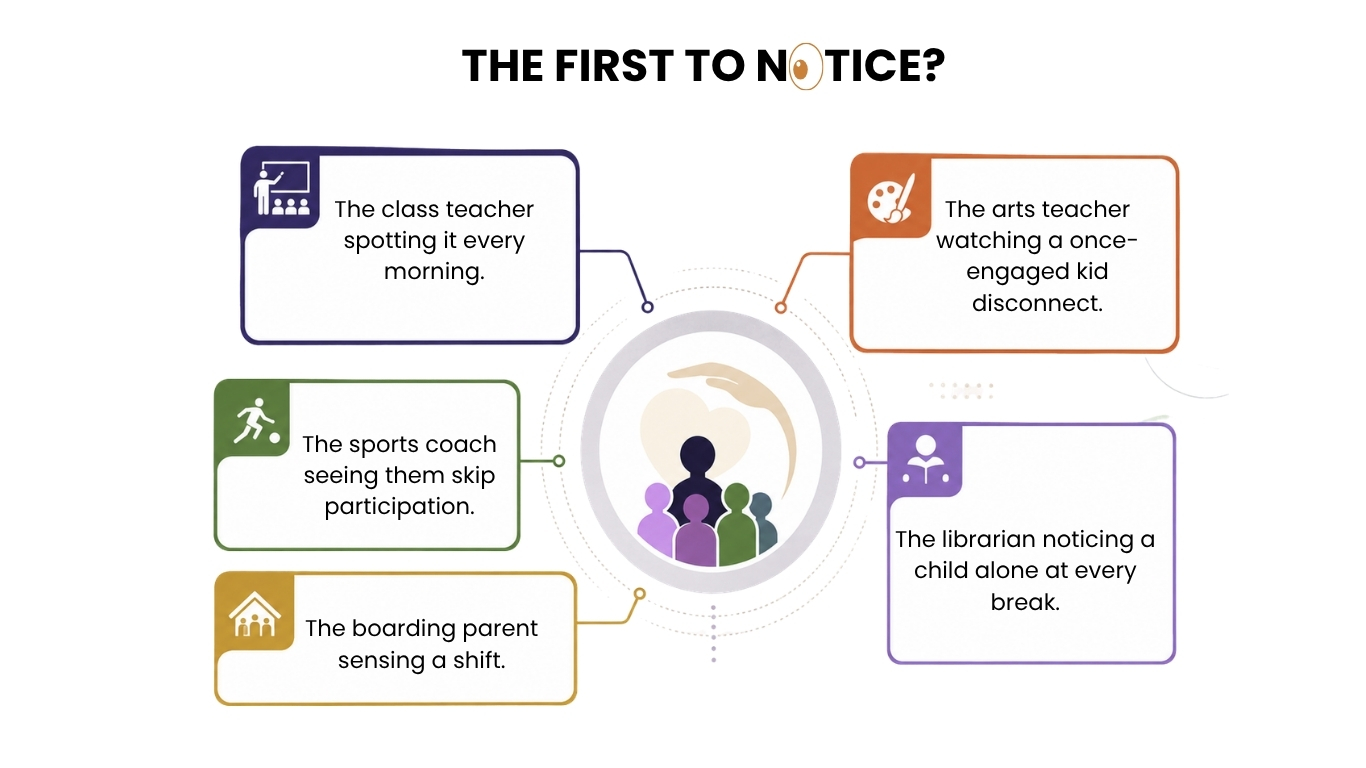
- The class teacher spotting it every morning.
- The sports coach seeing them skip participation.
- The boarding parent sensing a shift.
- The arts teacher watching a once-engaged kid disconnect.
- The librarian noticing a child alone at every break.
These adults are embedded in students’ daily lives. They witness emotional patterns in real time, thanks to sheer contact hours. Yet many lack formal training to identify distress, respond well, or escalate safely.
This isn’t a knock on educators, they care deeply. But care alone isn’t infrastructure. Good intentions can’t replace preparedness. And it’s a conversation schools must have now.
Student wellbeing has surged as a priority, with schools tackling anxiety, bullying, burnout, digital overload, loneliness, and more. That shift is huge.
But too many systems stay reactive that kicks in only after escalation such as dropping grades, spotty attendance, drastic behavior changes, parent complaints or a full-blown crisis
By then, silent struggles have simmered for months. Schools need proactive safety architecture and not just intentions, but systems, training, clear pathways, and shared accountability.
I chose “architecture” deliberately. Think physical safety: Schools don’t wait for fires to drill evacuations or assume goodwill covers safeguarding. They build protocols, assign roles, and train regularly. Wellbeing deserves the same rigor.
Proactive architecture doesn’t turn every teacher into a therapist (that backfires). It equips them with confidence:
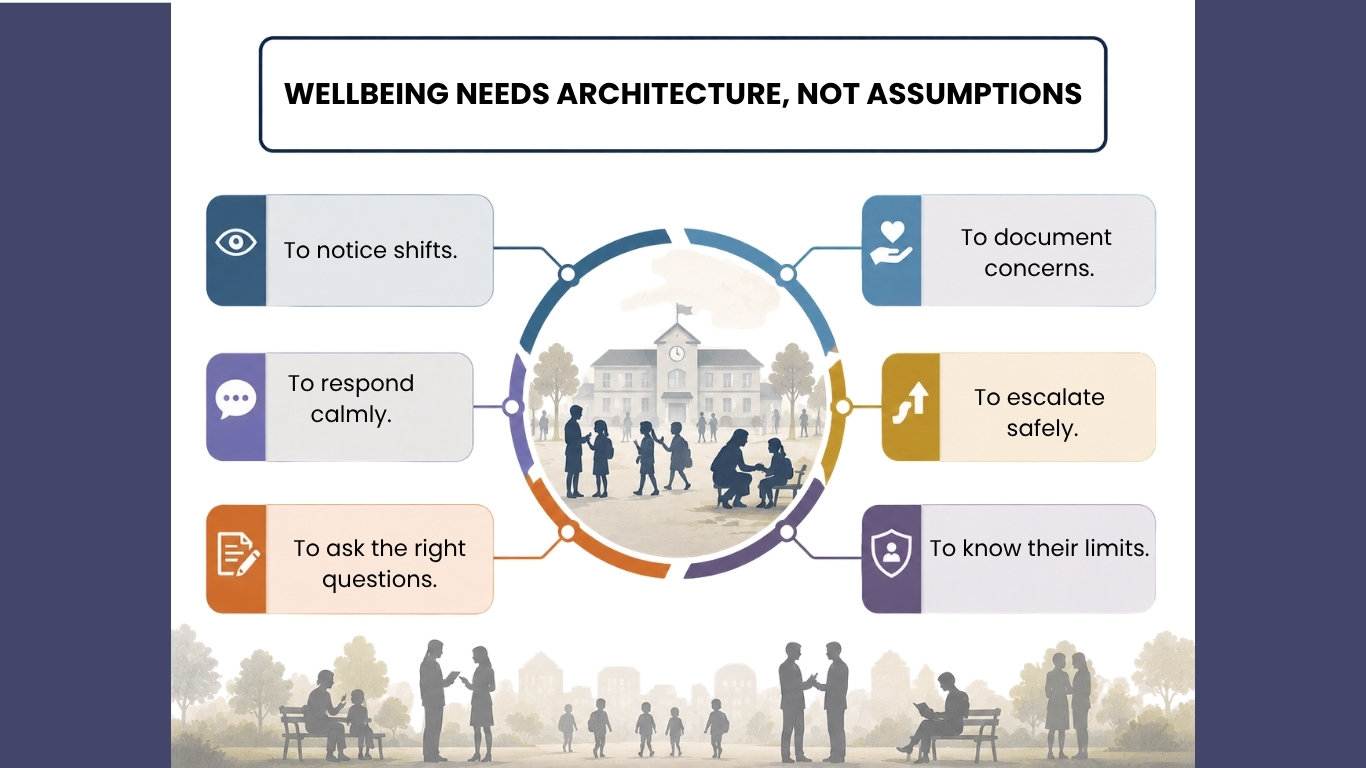
- To notice shifts.
- To respond calmly.
- To ask the right questions.
- To document concerns.
- To escalate safely.
- To know their limits.
Educators already shoulder emotional loads, training ensures they’re not alone.
Through my work with TAISI and leadership teams, I’ve seen momentum. Schools realize wellbeing can’t silo into one department, workshop, or counselor’s office. It must be cultural.
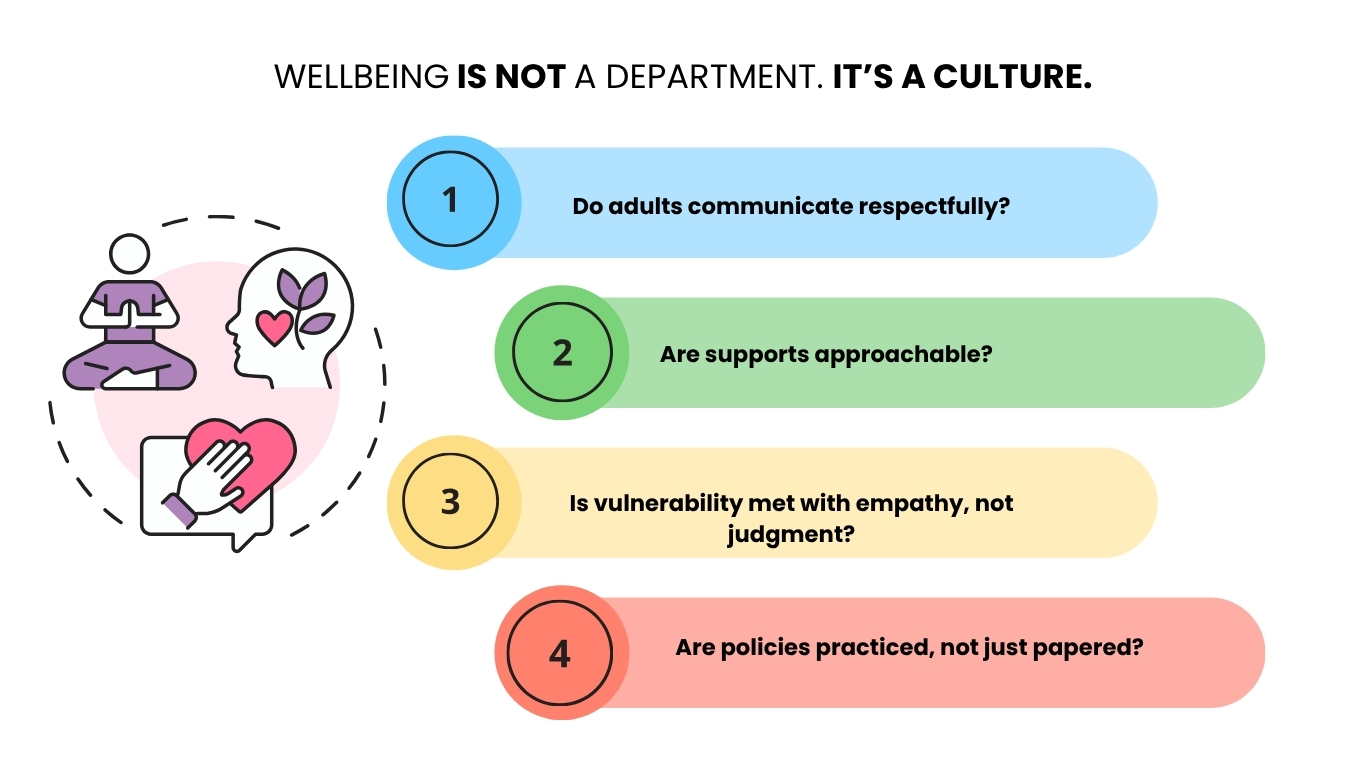
Students experience schools as ecosystems:
- Do adults communicate respectfully?
- Are supports approachable?
- Is vulnerability met with empathy, not judgment?
- Are policies practiced, not just papered?
Culture builds in quiet daily moments like a teacher’s check-in, a coach’s early catch, a safe escalation, a student asking for help pre-crisis. These rarely hit headlines but change lives.
Today’s children juggle unprecedented loads; academic pressure, social media, identity struggles, loneliness, family stress, endless connectivity. Schools must evolve.
Future-leading schools won’t just boast shiny campuses but prioritize holistic safety that is beyond performative initiatives, training proactively, treating emotional safety as core operations.
Students don’t need perfection. They need to be prepared.
It starts with one truth: Adults with the most contact hours are the first line of support. Are we equipping them?