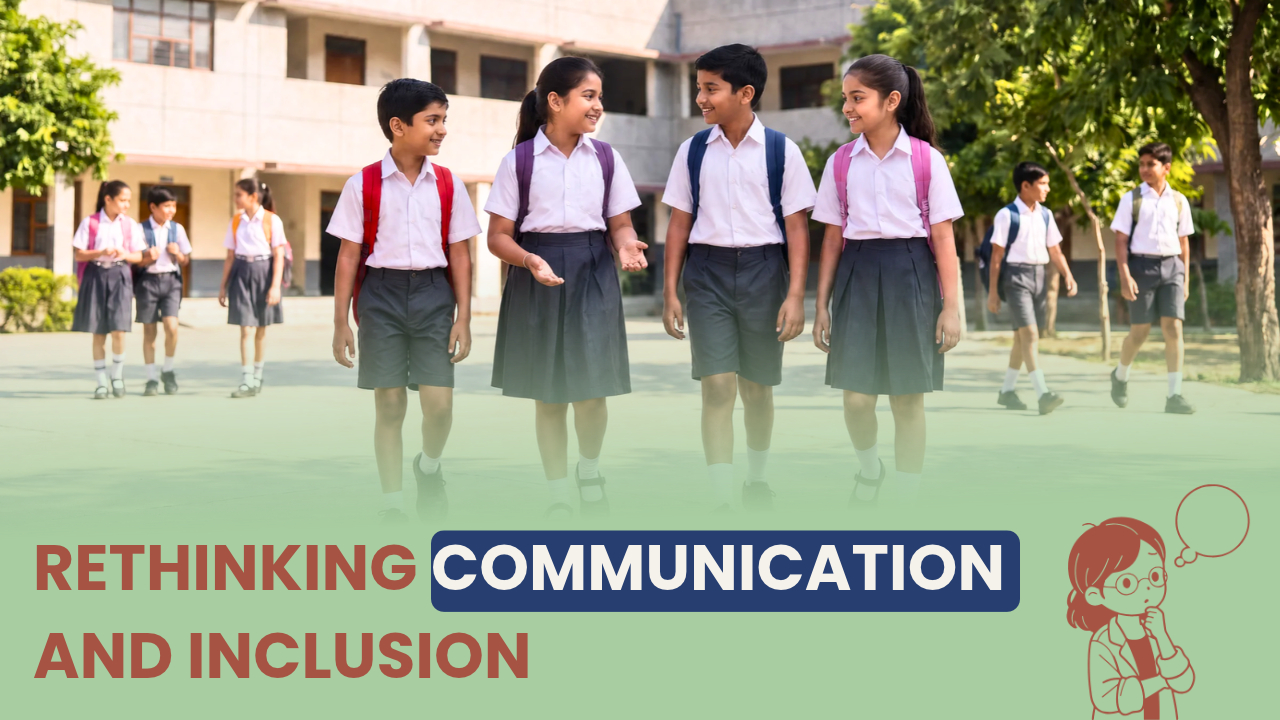
We are accustomed to certain sounds in a school: conversations overlapping in corridors, the excitement of children between classes, the occasional call of a teacher, and the familiar hum of a busy classroom. These sounds are so deeply woven into our understanding of school life that we rarely stop to notice them.
During our visit to the Welfare Centre for Persons with Speech and Hearing Impairments as part of My Safe Spaces’ Let’ s Talk campaign, something about this familiar environment felt different. For a moment, even my own voice seemed louder than usual. It was a small observation, but one that invited a larger question: how much of our understanding of communication is shaped by what we have always known?
We often associate communication with spoken words. We expect conversations to unfold through familiar exchanges of speech, questions and answers. Yet, stepping into a different communication environment reminds us that expression is not limited to the ways we are most accustomed to recognising it. Communication can take many forms, and connection does not depend on everyone communicating in the same way.
Beyond the Words We Hear 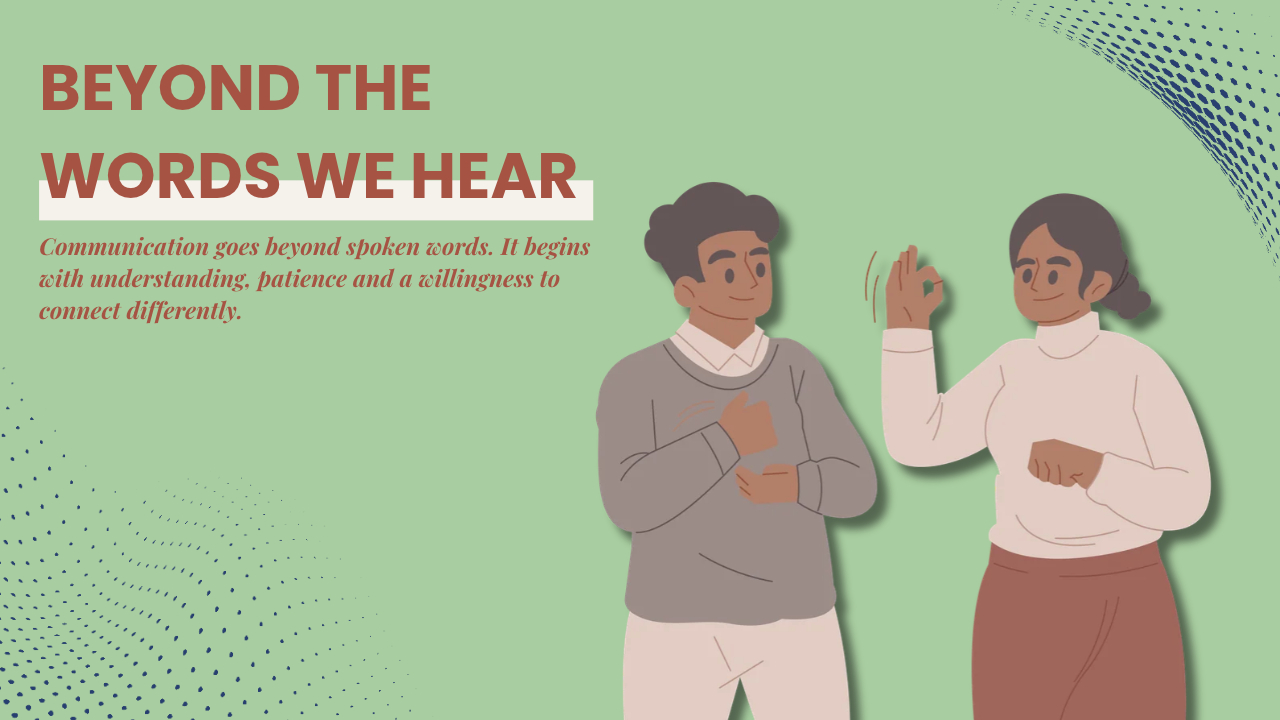
Our visit offered me an opportunity to reflect on the relationship between communication understanding and inclusion. In spaces where people communicate differently, and being unaware of the language they use, the responsibility to connect cannot rest solely on those whose ways of expressing themselves differ from the norm. It also rests with the environments where they enter and the people who share those spaces with them.
For people with speech and hearing impairments, communication may involve sign language, gestures, written expression, visual cues or other individual approaches. Recognising these forms of expression requires more than simply acknowledging their existence. It requires a willingness to listen differently, remain attentive, and move beyond assumptions about how understanding should look.
The absence of familiar sounds does not mean the absence of expression, emotion, thought or connection. Sometimes, it is our own expectations that limit what we notice. When we begin to question those expectations, we make room for a broader understanding of how people communicate and participate in the world around them.
Inclusion Begins with Making Room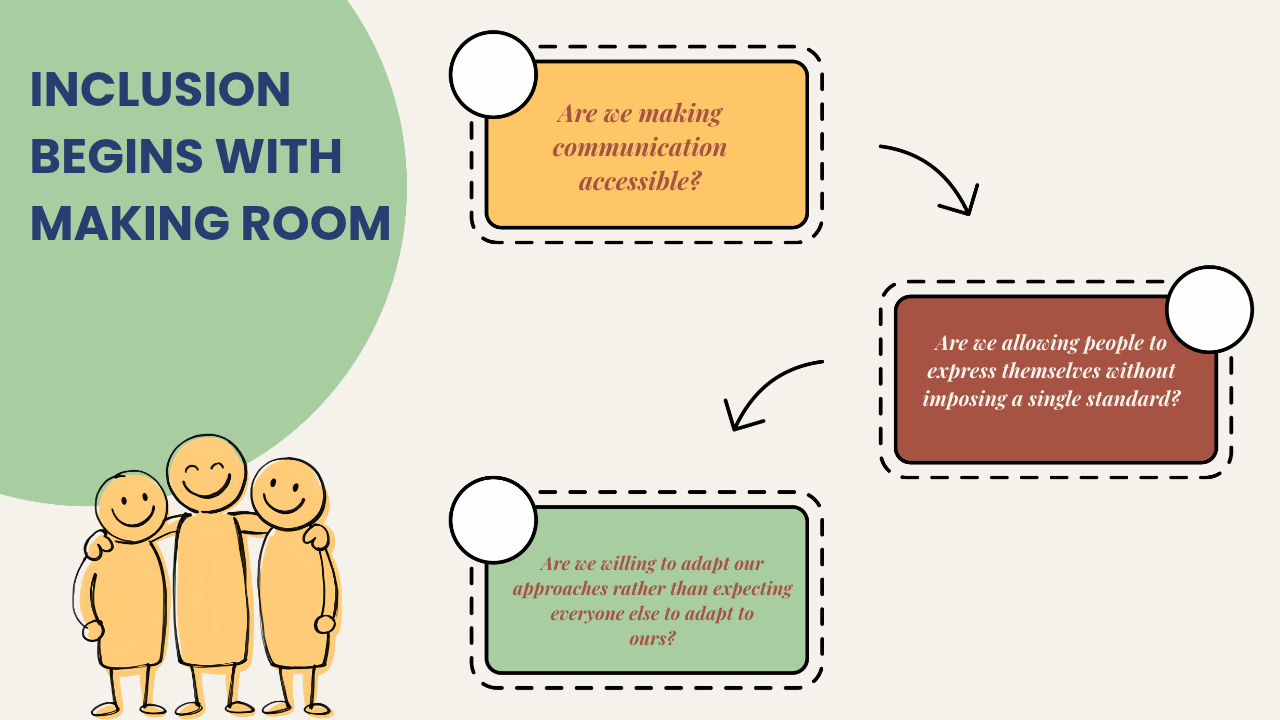
Inclusion is often discussed as a principle, but its meaning becomes clearer when we consider the everyday environments in which people learn, interact and grow. A space cannot be truly inclusive merely because everyone is permitted to enter it. It must also make participation possible, respect different needs, and recognise that there is no single way to engage with others.
This is particularly important when thinking about children and educational environments. Schools are not only places where academic learning takes place; they are also spaces where children develop their sense of belonging, build relationships and learn how to understand people whose experiences may differ from their own.
Creating inclusive environments, therefore, involves asking meaningful questions:
-Are we making communication accessible?
-Are we allowing people to express themselves without imposing a single standard?
-Are we willing to adapt our approaches rather than expecting everyone else to adapt to ours?
These questions extend beyond any one school or community. They are relevant to our classrooms, workplaces, public spaces and conversations. Inclusion begins when difference is not treated as an obstacle to be overcome, but as a reality that our environments must be equipped to accommodate.
Bringing Let’s Talk to Life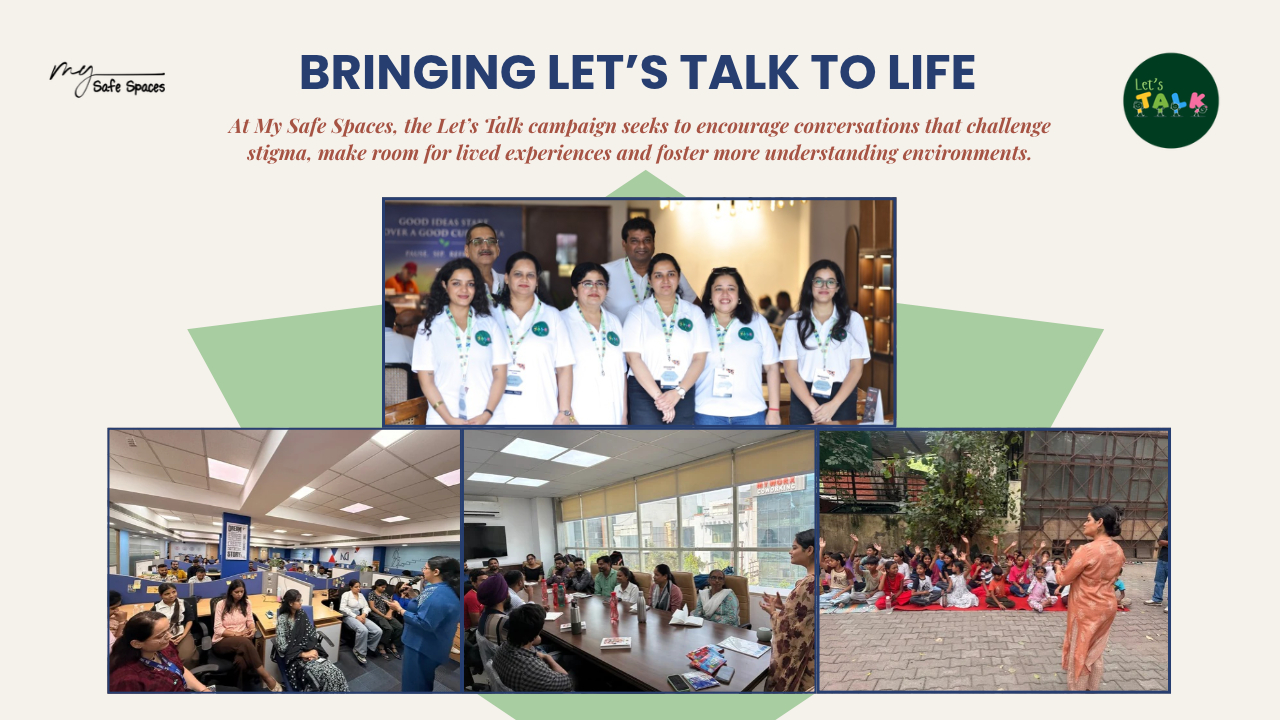
At My Safe Spaces, the Let’ s Talk campaign seeks to encourage conversations that challenge stigma, make room for lived experiences and foster more understanding environments. The visit to the Welfare Centre for Persons with Speech and Hearing Impairments was an opportunity to take this intention beyond words and reflect on what meaningful engagement can look like.
Mental health and well-being are closely connected to our ability to feel understood, respected and included. When people encounter barriers to expressing themselves or participating in their communities, it becomes especially important to consider whether the surrounding environment is responsive to their needs. Creating supportive spaces means recognising that people should not have to communicate in a particular way to have their experiences acknowledged.
The visit was a reminder that awareness is only a starting point. The next step is to carry that awareness into how we communicate, how we design our spaces and how we respond to the people around us.
Learning to Listen Differently
Perhaps one of the most important things we can learn from encounters that take us beyond our familiar environments is that the familiar is not necessarily universal. What feels natural to one person may not be accessible to another. What we overlook in our everyday routines may be precisely what we need to reconsider when thinking about inclusion.
The goal is not simply to become aware of different ways of communicating, but to build environments in which those differences are understood and accommodated without hesitation or judgment.
Sometimes, learning to listen begins with realising that we have more than one way to do so.