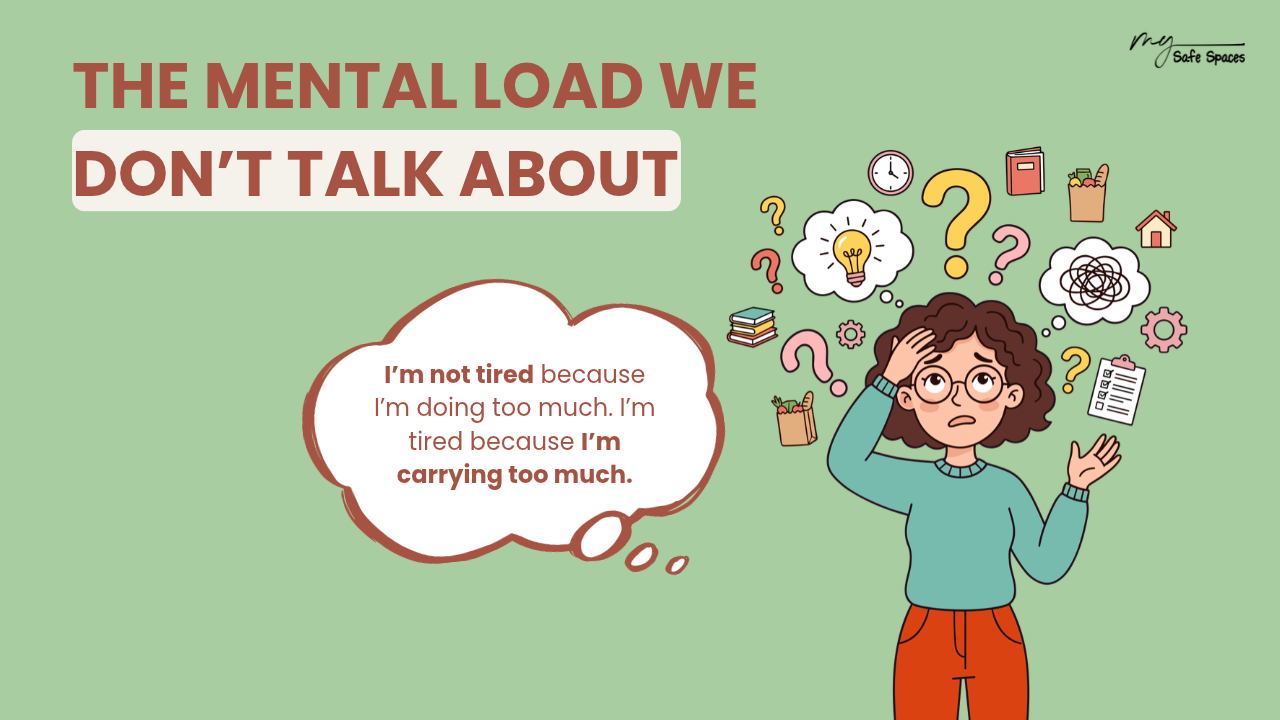
"I'm not tired because I'm doing too much. I'm tired because I'm carrying too much."
A few weeks ago, I asked someone a simple question:
"How was your weekend?"
"Relaxing," she replied.
But as she continued talking, her weekend sounded anything but relaxing.
She had planned meals for the week, remembered a relative's birthday, helped her child finish a project, ordered groceries, coordinated schedules, responded to pending messages, paid bills, and mentally prepared for Monday morning.
She wasn't physically running a marathon.
Yet she was exhausted.
And that's because not all tiredness comes from what we do.
Sometimes it comes from what we carry.
As a psychologist, I've noticed that many people today are experiencing a form of exhaustion that sleep alone doesn't fix. Their bodies are resting, but their minds remain "on duty."
They're remembering.
Anticipating.
Planning.
Worrying.
Checking.
Rechecking.
Managing invisible lists that nobody else can see.
Mental wellness isn't only about managing emotions. It's also about managing the mental load we carry every day.
Think of your mind as a browser.
Years ago, we opened three or four tabs.
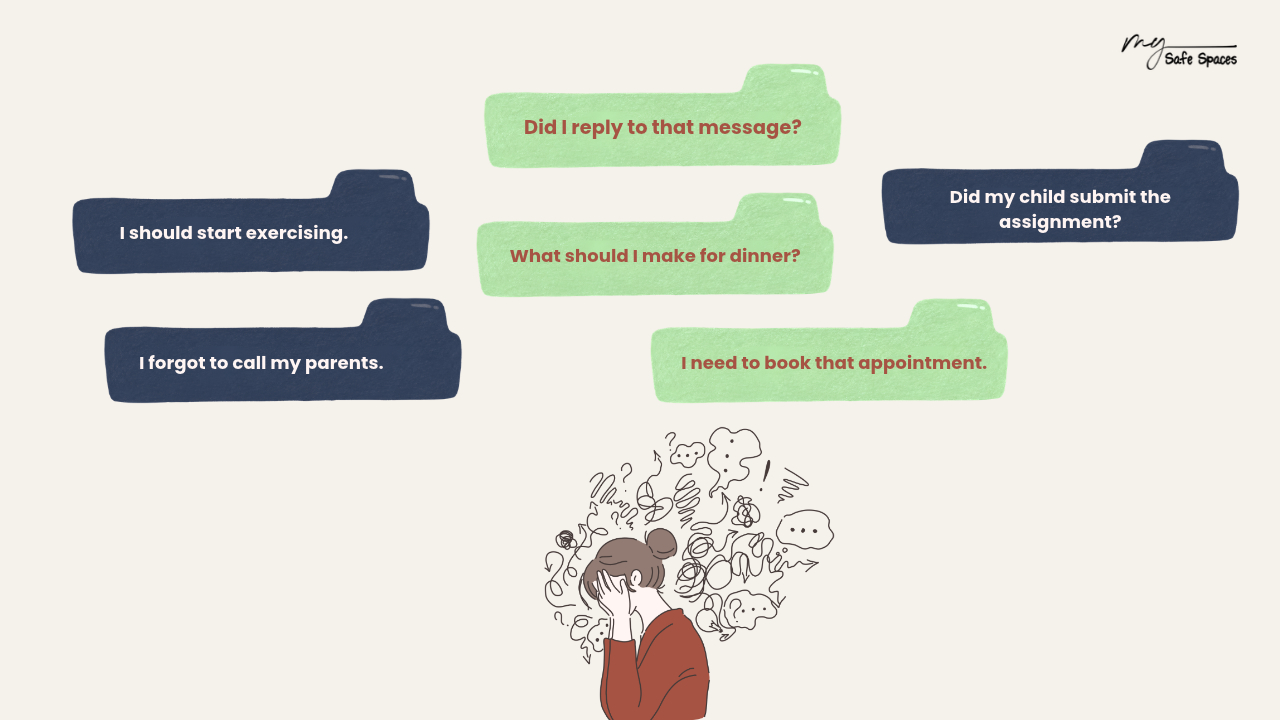 Did I reply to that message?
- What should I make for dinner?
- I need to book that appointment.
- Did my child submit the assignment?
- I should start exercising.
- I forgot to call my parents.
- What if the presentation doesn't go well?
Individually, each thought seems harmless.
Together, they create noise.
And the brain pays a price for that noise.
Research in psychology consistently shows that the brain is not designed for constant multitasking. Every mental switch consumes energy. That's why a day spent sitting at a desk can leave someone just as exhausted as a day spent doing physical labor.
The challenge is that many of us have become so accustomed to mental overload that we mistake it for normal living.
We say:
"I'm fine."
"It's just a busy phase."
"Everyone feels this way."
And perhaps they do.
But normal and healthy are not always the same thing.
One of the simplest ways to understand mental wellness is to ask yourself:
"When was the last time I did something without simultaneously thinking about something else?"
When was the last time you drank tea without checking your phone?
Listened to music without answering emails?
Played with a child without looking at the clock?
Walked without planning your next task?
For many people, the answer is surprisingly difficult.
Mental wellness is not merely the absence of stress.
It is the presence of moments in which the mind can finally unclench.
Most of us have a cupboard at home where we keep putting things we'll "deal with later."
A receipt.
An old cable.
A broken frame.
Something useful, just not right now.
Our minds work the same way.
We store postponed decisions, unresolved worries, lingering guilt, and conversations we wish had gone differently.
Eventually the cupboard becomes so full that opening the door feels overwhelming.
Mental wellness isn't always about adding something new.
Sometimes it's simply about making enough space to breathe again.
"What can I put down for a moment?" 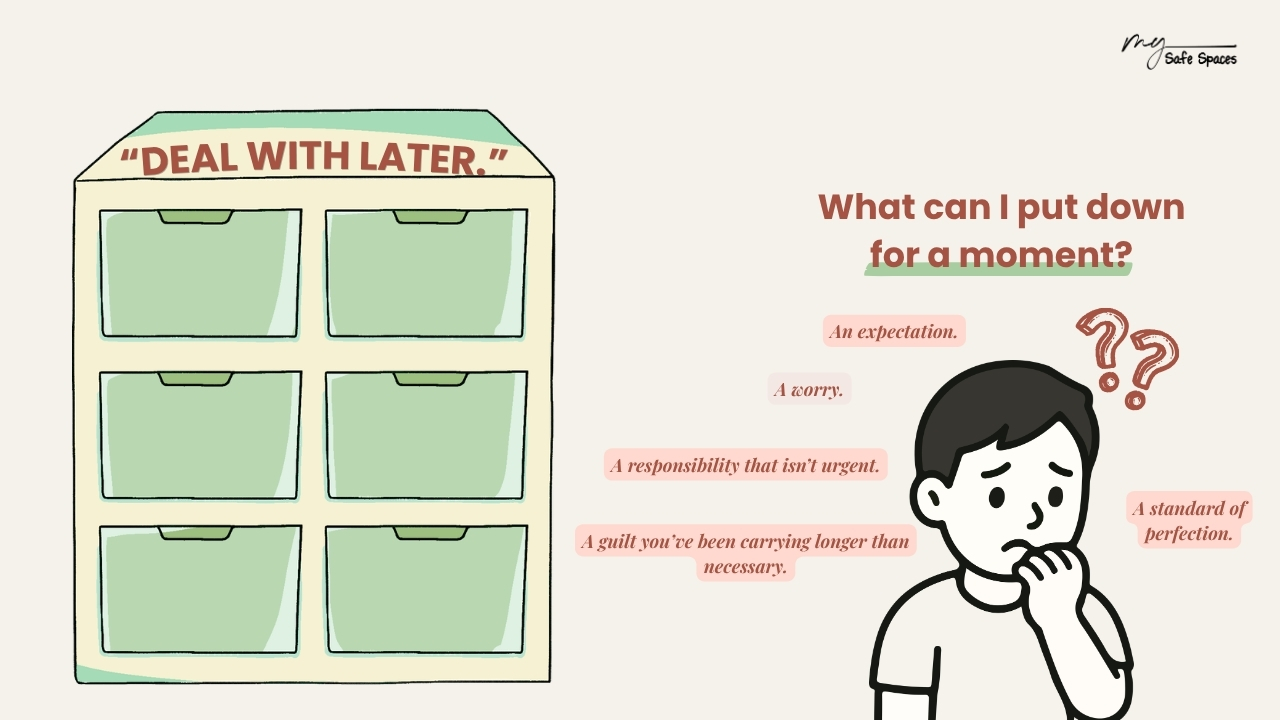
A worry.
An expectation.
A responsibility that isn't urgent.
A standard of perfection.
A guilt you've been carrying longer than necessary.
Because mental wellness is not always about adding more self-care.
Sometimes it is about carrying less.
And maybe that's the reminder many of us need today:
You were never meant to carry every thought, every responsibility, and every expectation all at once. Give yourself permission to put some of it down. Your mind deserves a place to rest, too.
Perhaps true mental wellness begins the day we stop asking, "What more should I carry?" and start asking, "What can I finally let go of?"